Judged Before You Speak: What UK Hiring Managers Notice in the Opening Minute of an Interview

There is a well-documented psychological principle that human beings form lasting impressions within seconds of meeting someone new. In a professional interview context, that window is particularly unforgiving. UK hiring managers — whether they acknowledge it openly or not — begin evaluating candidates the moment they walk through the door, log into a video call, or exchange a greeting in a reception area. By the time the first formal question is posed, a great deal has already been decided.
Understanding what is being assessed in those opening sixty seconds is not about gaming the system. It is about ensuring that the genuine competence and character you bring to the table are not obscured by easily correctable habits or cultural missteps.
The Arrival Itself Carries Weight
Punctuality remains a non-negotiable in British professional culture, but the nuances extend beyond simply arriving on time. Candidates who arrive excessively early — more than ten or fifteen minutes before a scheduled interview — can inadvertently create pressure for reception staff and signal poor time management of a different kind. The accepted convention is to arrive no more than five to ten minutes ahead of schedule.
How you conduct yourself in the reception area also matters more than most candidates realise. Hiring managers frequently ask front-of-house staff for informal impressions. Were you polite? Did you appear relaxed or visibly anxious? Were you scrolling your phone with evident distraction, or composed and present? These observations feed into a broader picture that begins forming well before any formal assessment.
Body Language: The British Calibration
Body language advice in interview preparation guides tends toward the universal — sit up straight, maintain eye contact, offer a firm handshake. In a UK context, however, the calibration matters enormously. British professional culture occupies a particular middle ground: warmth is appreciated, but overt enthusiasm can read as performative; confidence is essential, but assertiveness that tips into dominance will raise eyebrows.
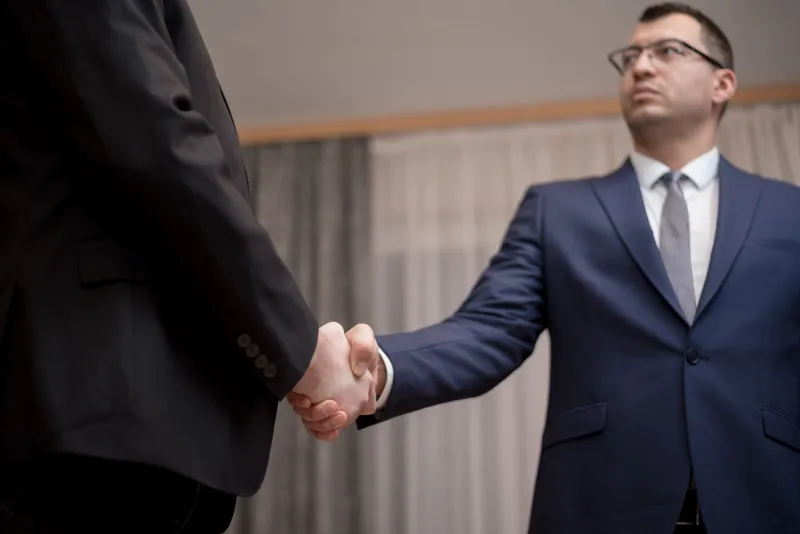
Eye contact is a useful example. Sustained, unbroken eye contact is considered intense and slightly aggressive in many British workplaces. The natural rhythm — engaging directly when speaking, briefly breaking contact when listening or thinking — signals attentiveness without coming across as confrontational. Similarly, a handshake (where applicable and offered) should be firm but not crushing. In the post-pandemic landscape, many interviewers have moved away from physical greetings altogether; following the interviewer's lead is always the safer approach.
Posture communicates confidence or its absence almost instantly. Slouching, crossed arms, or fidgeting with a pen or lanyard are among the most commonly noted negative signals. Leaning slightly forward — particularly when the interviewer is making a key point — conveys engagement without crowding the space.
The Verbal Opening: Tone, Register, and the Modesty Paradox
The first words a candidate speaks are scrutinised with considerable care. British hiring culture presents a particular paradox here: candidates must project enough confidence to be taken seriously, whilst avoiding the self-promotion that can feel culturally abrasive in a society that broadly values modesty and understatement.
Opening pleasantries are not throwaway moments. Responding to "How was your journey?" or "Did you find us alright?" with a brief, warm, and positive answer — rather than a lengthy account of transport delays or parking difficulties — sets a constructive tone. Complaining, even mildly, in the first thirty seconds is a subtle red flag that many interviewers cite without candidates ever knowing it.
Verbal filler words — "like", "basically", "you know", "sort of" — are disproportionately noticeable in an interview setting, particularly in sectors such as finance, law, or professional services, where precision of language is itself a valued competency. This does not mean candidates should speak in stilted, over-rehearsed sentences. It means being conscious of habitual verbal patterns and moderating them in high-stakes contexts.
Regional Accents and Informal Speech: The Reality
It would be dishonest to ignore the fact that accent and regional dialect continue to influence perceptions in certain corners of the British job market. Research has consistently shown that candidates with strong regional accents — particularly those associated with working-class areas of the North, Midlands, or parts of Wales — can face unconscious bias in some sectors.
The practical guidance here is measured. Authenticity matters, and attempting to artificially neutralise an accent is neither advisable nor necessary. What candidates can legitimately focus on is clarity of speech and register. Informal phrasing — contractions like "gonna" or "wanna", or colloquialisms that are deeply regional — can create distance in formal interview settings, not because of where you are from, but because register signals awareness of professional context. Speaking clearly, at a measured pace, and in a register appropriate to the role and sector is the relevant adjustment.
It is equally worth noting that many progressive UK employers are actively working to address accent bias, and in creative, tech, and media industries, regional identity is increasingly seen as an asset rather than a liability.
What Interviewers Say They Notice — But Rarely Tell You
In candid conversations, British hiring managers across industries frequently cite the following as immediate negative signals:
- Checking a phone after entering the interview room or during initial greetings, even briefly
- Overfamiliarity — using the interviewer's first name repeatedly, or adopting an informal tone before it has been established as appropriate
- Unprepared materials — fumbling for a CV, notebook, or portfolio in a way that suggests disorganisation
- Negative commentary about a previous employer, even when delivered in measured language
- Excessive self-deprecation — the British value for modesty has limits; candidates who apologise for their experience or undermine their own achievements before being asked a single question can undermine confidence in them
Conversely, the positive signals that interviewers recall most readily include: a composed and unhurried manner, a genuine smile at the appropriate moment, well-prepared but not robotic answers to opening small talk, and the simple act of switching a phone to silent and placing it face-down (or away entirely) before proceedings begin.
Preparing for the Sixty Seconds That Set the Tone
Most interview preparation focuses heavily on answering competency questions and researching the employer. Comparatively little attention is paid to the opening moments — which is precisely why they trip up otherwise strong candidates.
In the days before an interview, it is worth rehearsing not just your answers but your entrance. Consider how you will introduce yourself, how you will respond to initial small talk, and what your physical presence communicates. If possible, conduct a mock run-through with someone who can offer honest feedback on body language and verbal habits.
On the day itself, arrive appropriately early, treat every person you encounter with courtesy, and enter the room composed rather than eager to perform. The interview begins before the questions do — and the candidates who understand that are already a step ahead.
At FD Job Vacancies, we connect ambitious professionals with roles across the UK. Whether you are preparing for your next interview or exploring new opportunities, our platform is designed to support every stage of your career journey.